
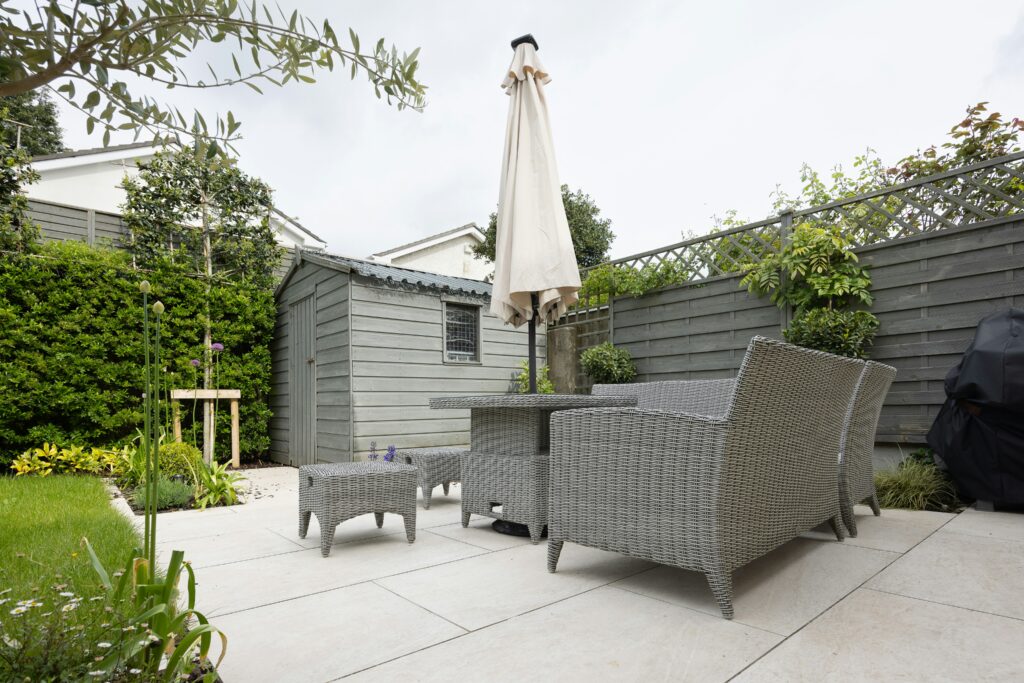
Paver Patio vs Concrete Patio: Which Is Right for Your Yard?
A patio is one of the best ways to make your backyard more usable. When it comes to materials, most homeowners compare pavers and poured concrete. Here is how they stack up so you can pick the right one for your home.
Paver Patios
Pavers are individual units made of concrete, brick, or stone, set on a compacted gravel and sand base. Because they are separate pieces with joints between them, they can flex slightly as the ground shifts, which helps them handle Northern Virginia freeze and thaw cycles.
Pros:
- Many colors, shapes, and patterns to match your home
- Resistant to cracking when installed on a proper base
- Easy repairs, since a damaged paver can be lifted out and replaced
- Ready to use soon after installation, with no curing time
Cons: pavers usually cost more upfront, and joints may need occasional weeding or fresh joint sand over the years.
Concrete Patios
Poured concrete is a solid slab. It is a practical, budget friendly option, and stamped or colored concrete can add a decorative look.
Pros: lower upfront cost, a smooth continuous surface, and simple upkeep.
Cons: concrete can crack over time as the ground moves and freezes, and cracks are hard to repair without the patch showing. Stamped concrete also needs resealing to keep its color.
Which One Should You Choose?
If you want a flexible design, easy repairs, and a surface built to handle our winters, pavers are hard to beat. If budget is your top priority and you want a simple, clean surface, concrete can be a smart choice.
Whichever you choose, the base matters most. A well prepared, properly compacted base is what keeps a patio level and solid for years. That is always a big part of how we plan every paver project.
Ready to Plan Your Project?
Browse the options on our Project Planner to see what fits your home, then request your free estimate. We serve homeowners across Fairfax, Loudoun, and Prince William Counties, or call us at (703) 594-6698.


